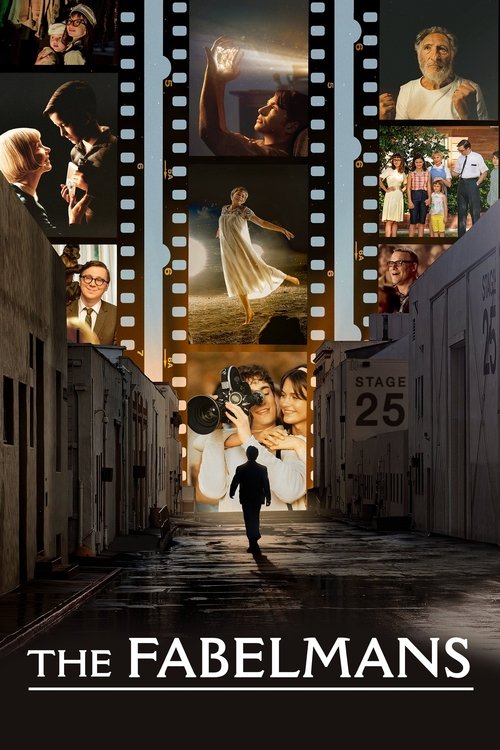
The Fabelmans
Released: 2022-11-11
Growing up in post-World War II era Arizona, young Sammy Fabelman aspires to become a filmmaker as he reaches adolescence, but soon discovers a shattering family secret and explores how the power of films can help him see the truth.
Drama
7.6 / 2874
Duration: 151 min.
Budget: $40.0M
Revenue: $45.6M
Trailer
Gallery
Reviews

Peter McGinn
Rating:6/10
I saw several negative reviews before I watched this, and I assumed there was an element of grading someone a bit more harshly when they have achieved wild success or, heaven forbid, if they do stellar work in one genre such as sci-fi or adventure and then have the chutzpah to create a film in a different genre not appreciated by the sci-fi etc. fans. Maybe there was some of that baggage involved; how else to explain one-star reviews. Really? A disgusting gross-out comedy might get 4 stars, but a serious biopic gets one? But I have given it six stars, probably my low for a Spielberg movie. I thought the film was too episodic. Here is where he saw his first movie; here is him with his first camera; here is where he learns something upsetting about his parents’ marriage; here is some bullying and then that part in every coming of age movie it seems, where a pretty girl throws herself at him. Sure wish that had happened to me at that tender age. And some of the scenes felt rather cliched to me. Also, and this is a bit of a spoiler, at one point his mother assures him she has not done ”that” with Bennie, and she loves her children and husband more than anything, but she still can’t live without Bennie? I had trouble with that revelation. But it isn’t all negative stuff. I thought a lot of the acting was strong, with a few exceptions, and most of the dialogue was good, but when a film is 2 and a half hours long, consistency is hard to come by, and there were a few hiccups here and there. The scene with John Ford was intriguing, but they could have done a bit more with it. I liked the two sisters as characters, but again, not enough depth was given to them. A bit of a lost opportunity.
Hover to reveal
tensharpe
Rating:8/10
“The Fabelmans” is a movie loosely based on the true story of Steven Spielberg’s own childhood. Produced after the death of his mother Leah Adler and using the fictional family name of the Fabelmans the movie focuses primarily on the iconic film makers family and the impact his parents divorce had on his young life. “The Fabelmans” is rich in exposing the influences behind classic movies like E.T. ( Set in a broken home ) and some early techniques at effects the film maker used to better his home movies. “The Fabelmans” starts in the 1950’s with Sammy Fabelman experiencing for the first time the magic of cinema with his parents. Slightly traumatised by the movie, particularly a train crash scene, it’s from this emotional experience the first glimpses of becoming a film maker appear. Who of us that have delved into the arts ( film making, actors , singers , performers , etc ) didn’t start off creating these types of home made replicas? The idyllic family set up, with the ever growing confident and more adept young home movie maker, becomes derailed when after editing his 8mm footage of a family camping trip he discovers all was not as he remembered. The impact of what Sam discovers about his concert pianist mother and that fateful trip results in the eventual breakdown of his parents. As the movie moves into the early 1960’s and Spielberg’s high school years “The Fabelmans”touches on religion, race issues and first love. Due to the impact of that fateful camping holiday and therefore following a hiatus of not wanting to make any further home movies, Sam is persuaded by his girlfriend to film the end of school year beach party get together. The impact of Sam’s return to film making is clearly visible after the graduation film he produced is shown at the school prom to great acclaim. “The Fabelmans” is well documented as being a love letter to cinema but equally it is Spielberg’s love letter to his family. This is the movies key fact, the acceptance of multiple things happening all at once. Vocation is driven by both fear and talent, loving relationships break down, and movies that appear simplistic are highly sophisticated. With an extremely satisfying ending “ The Fabelmans” is a beautifully crafted work of art and remarkable insight into one of the most famous and influential directors Hollywood has ever produced
Hover to reveal
CinemaSerf
Rating:7/10
Gabriel LaBelle is great in this generally entertaining and interesting tale of a young lad ("Sammy") growing up in post-war America who has a penchant (and eye) for film making. Growing up in an happy environment with mother "Mitzi" (Michelle Williams), father "Burt" (Paul Dano) and sister "Natalie" (Keeley Karsten) they all rub along amiably enough. His father is a developer in the computer industry, and together with their best family friend "Bennie" (Seth Rogan) relocate to a better opportunity in Arizona. It's after a family camping trip - and the death of his grandmother - that the young "Sammy" is asked to make a short movie from the film he shot whilst they were all messing about in the wilderness. His attention to the detail of his photography gradually reveals something that upsets him, and threatens the very equilibrium of their erstwhile happy family. What now ensues demonstrates how, gradually, all come to terms with his discovery and he determines just where his future career lies. I am not really a fan of Williams - I find her sterile most of the time; but here she is on really good form. The character of "Mitzi" is probably the most interesting, certainly the most conflicted - and she delivers it well. There are two lovely little, inspirational in differing ways, cameos from Judd Hirsch and from David Lynch at the end of this film that has a distinct lusciousness to it. Like the performances, the photography and the soundtrack are natural and engaging and could easily convince any of us that a career in film making is possible - indeed, straightforward! I don't know the extent to which it is autobiographical of Steven Spielberg's life, but to be honest I didn't really care. This is just a fine film to watch.
Hover to reveal
badelf
Rating:6/10
The film is eminently watchable. The acting and directing are, of course, excellent. The script, however, meanders aimlessly like Moses in the desert. Where's the point? What are the important take-aways? These questions and more are not answered. For such a long film, the character development of the supporting roles was wholly absent. In my movie list of Directors About Themselves (https://boxd.it/iEWZO), this is weakest of the whole bunch.

Marco-Hugo Landeta Vacas
Rating:9/10
(CASTELLANO) Me ha gustado mucho porque no la sentí como una simple "carta de amor al cine", de esas que suenan bonitas pero se quedan en postal. Me llegó más hondo. La vi como una película sobre cómo nace una mirada, pero también sobre lo que cuesta tenerla. Sobre un niño que descubre que una cámara puede ser un juguete, un escudo, una forma de ordenar el caos y también un instrumento peligroso, porque cuando uno mira de verdad empieza a ver cosas que quizá preferiría no haber visto. Lo precioso es que Spielberg no convierte su infancia en un altar perfecto. Hay ternura y una emoción enorme por el descubrimiento del cine, pero también hay tristeza, grietas familiares, mudanzas, soledad, culpa y esa sensación de que crecer consiste en entender que tus padres no son solo "tus padres", sino personas con deseos, renuncias, errores y dolores propios. Por eso me pareció tan bonita: porque habla del amor familiar sin negar lo que ese amor puede romper por dentro. La madre es el corazón más luminoso y más doloroso. Michelle Williams está extraordinaria, con alegría, fragilidad, necesidad de vivir y tristeza escondida. Es una persona que ama, hiere, no sabe quedarse quieta y a veces parece iluminar una habitación y apagarla al mismo tiempo. La película la mira con adoración, pero no con ceguera. Paul Dano también me pareció magnífico en el otro extremo: un padre bueno, inteligente, racional, trabajador, incapaz de comprender del todo la fiebre artística de su hijo y de su mujer, pero no por maldad. Me gustó mucho que no lo convierta en villano. Quiere a su familia, pero no entiende que amar no siempre significa saber mirar. En esa diferencia entre la madre artista y el padre técnico está una de las grandes heridas: dos formas de entender la vida que se quieren y, aun así, no siempre pueden convivir. El protagonista crece justo en medio de esa tensión. Para él, filmar empieza siendo asombro, luego juego, luego oficio, luego necesidad. Me emocionó esa manera en que se muestra el aprendizaje casi físico del cine: cortar, montar, repetir, manipular una imagen, cambiar el sentido de un gesto, descubrir que la realidad puede transformarse al pasar por una cámara. No es teoría, es descubrimiento. Y ahí Spielberg demuestra una humildad preciosa: no se presenta como genio predestinado, sino como alguien que aprende mirando, equivocándose, obsesionándose y necesitando contar. Hay escenas sobre el poder de las imágenes que son una maravilla. La cámara no solo registra; revela. Puede embellecer, mentir, consolar y hacer daño. Esa idea me parece fundamental, porque aquí el cine no aparece como magia inocente, sino como una magia ambigua. Filmar puede unir a una familia, hacer feliz a unos amigos, convertir a un adolescente torpe en alguien con un lugar propio. Pero también puede mostrar una verdad íntima y obligar a mirar lo que nadie quería nombrar. También me gustó mucho su tono. Es larga, sí, pero yo la viví con placer, como si alguien estuviera abriendo una caja de recuerdos sin prisa. Tiene humor, luz y momentos de una calidez enorme, pero nunca me pareció blanda. Debajo de la amabilidad hay melancolía. Debajo de la nostalgia hay duelo. Y debajo del relato de vocación hay una pregunta dura: cuánto se puede sacrificar por hacer aquello que uno necesita hacer. El cine aparece como refugio, pero también como separación. La parte adolescente me parece especialmente buena porque no idealiza el camino. Hay torpeza, antisemitismo, deseo de encajar, humillación, rabia y ese miedo tan reconocible a no pertenecer a ninguna parte. Las películas caseras le dan poder, pero también lo aíslan. Le permiten vengarse, seducir, controlar una situación o transformar a quienes lo rodean en personajes. Y eso tiene algo fascinante y algo inquietante. La vocación no aparece como una bendición limpia, sino como una fuerza que salva y complica a la vez. Entiendo que algunos puedan verla como una obra autoindulgente o demasiado amable. Pero a mí me pareció justo lo contrario: un acto de memoria muy generoso, lleno de amor y de perdón, pero también de lucidez. Spielberg se mira con cariño, sí, pero no se limita a decir “mirad cómo nació el mago”. Lo que cuenta es más hermoso: cómo un niño descubre que el cine puede ordenar su mundo cuando su mundo empieza a romperse. Y eso me parece profundamente emocionante. Al final, me quedé con la sensación de haber visto una película grande, íntima y muy humana. Una obra sobre la familia, la vocación, la memoria, el dolor de crecer y la necesidad de convertir lo vivido en imágenes para poder entenderlo. Tiene momentos admirables, interpretaciones preciosas y una emoción que no me pareció fabricada, sino nacida de alguien que lleva toda la vida contando historias y por fin se atreve a mirar hacia el origen de todas ellas. Me gustó mucho. Parece suave, pero se queda dentro. (ENGLISH) I liked it very much because I did not feel it as a simple “love letter to cinema”, the kind that sounds beautiful but remains a postcard. It reached me deeper. I saw it as a film about how a gaze is born, but also about what it costs to have one. About a child who discovers that a camera can be a toy, a shield, a way of ordering chaos and also a dangerous instrument, because when you truly look, you begin to see things you might rather not have seen. What is beautiful is that Spielberg does not turn his childhood into a perfect altar. There is tenderness and enormous emotion in the discovery of cinema, but there is also sadness, family cracks, moves, loneliness, guilt and that feeling that growing up means understanding that your parents are not just “your parents”, but people with desires, renunciations, mistakes and pains of their own. That is why I found it so beautiful: because it speaks of family love without denying what that love can break inside. The mother is the most luminous and most painful heart of the film. Michelle Williams is extraordinary, with joy, fragility, a need to live and hidden sadness. She is a person who loves, wounds, cannot stay still and sometimes seems to light up a room and darken it at the same time. The film looks at her with adoration, but not with blindness. Paul Dano also seemed magnificent to me at the other extreme: a good, intelligent, rational, hardworking father, unable to fully understand the artistic fever of his son and wife, but not out of cruelty. I really liked that the film does not turn him into a villain. He loves his family, but he does not understand that loving does not always mean knowing how to look. In that difference between the artist mother and the technical father lies one of the great wounds: two ways of understanding life that love each other and yet cannot always coexist. The protagonist grows up right in the middle of that tension. For him, filming begins as wonder, then play, then craft, then necessity. I was moved by the way the film shows the almost physical apprenticeship of cinema: cutting, editing, repeating, manipulating an image, changing the meaning of a gesture, discovering that reality can be transformed when it passes through a camera. It is not theory, it is discovery. And there Spielberg shows a lovely humility: he does not present himself as a predestined genius, but as someone who learns by looking, making mistakes, obsessing and needing to tell. There are scenes about the power of images that are wonderful. The camera does not only record; it reveals. It can beautify, lie, console and hurt. That idea seems fundamental to me, because here cinema does not appear as innocent magic, but as ambiguous magic. Filming can unite a family, make friends happy, turn an awkward teenager into someone with a place of his own. But it can also show an intimate truth and force everyone to look at what nobody wanted to name. I also really liked its tone. It is long, yes, but I lived it with pleasure, as if someone were opening a box of memories without hurry. It has humor, light and moments of enormous warmth, but it never seemed soft to me. Beneath the kindness there is melancholy. Beneath the nostalgia there is grief. And beneath the story of vocation there is a hard question: how much can be sacrificed to do what one needs to do. Cinema appears as refuge, but also as separation. The teenage section seems especially good to me because it does not idealize the path. There is awkwardness, antisemitism, the desire to fit in, humiliation, anger and that very recognizable fear of not belonging anywhere. The home movies give him power, but also isolate him. They allow him to take revenge, seduce, control a situation or transform those around him into characters. And that has something fascinating and something disturbing. Vocation does not appear as a clean blessing, but as a force that both saves and complicates. I understand that some may see it as self-indulgent or too kind. But to me it seemed exactly the opposite: an act of memory that is very generous, full of love and forgiveness, but also lucid. Spielberg looks at himself with affection, yes, but he does not simply say, “look how the magician was born”. What he tells is more beautiful: how a child discovers that cinema can order his world when his world begins to break. And that seems deeply moving to me. In the end, I was left with the feeling of having seen a large, intimate and very human film. A work about family, vocation, memory, the pain of growing up and the need to turn lived experience into images in order to understand it. It has admirable moments, beautiful performances and an emotion that did not feel manufactured, but born from someone who has spent his whole life telling stories and finally dares to look back at the origin of all of them. I liked it very much. It seems gentle, but it stays inside.
Hover to reveal